As urban density increases in metropolitan hubs like Riyadh and Dubai, noise pollution has emerged as a major factor affecting the health, sleep quality, and productivity of building occupants. The building envelope is the primary barrier against exterior noise, and the glazing system is historically its weakest acoustic link. Acoustic engineering focuses on maximizing Sound Transmission Class (STC) ratings without compromising thermal performance or visual clarity.
The Physics of Sound Transmission Loss
Coincidence Resonance and Mass Law
Glass, like all solid materials, follows the Mass Law: doubling the mass (thickness) of the glass increases the transmission loss by approximately 6 dB. However, glass also suffers from a 'coincidence resonance' frequency at which it vibrates easily, allowing sound to pass through. For standard glass, this resonance frequency falls in the critical range of human speech and traffic rumble.
Acoustic Glazing Solutions
PVB Laminates and Asymmetrical Double Glazing
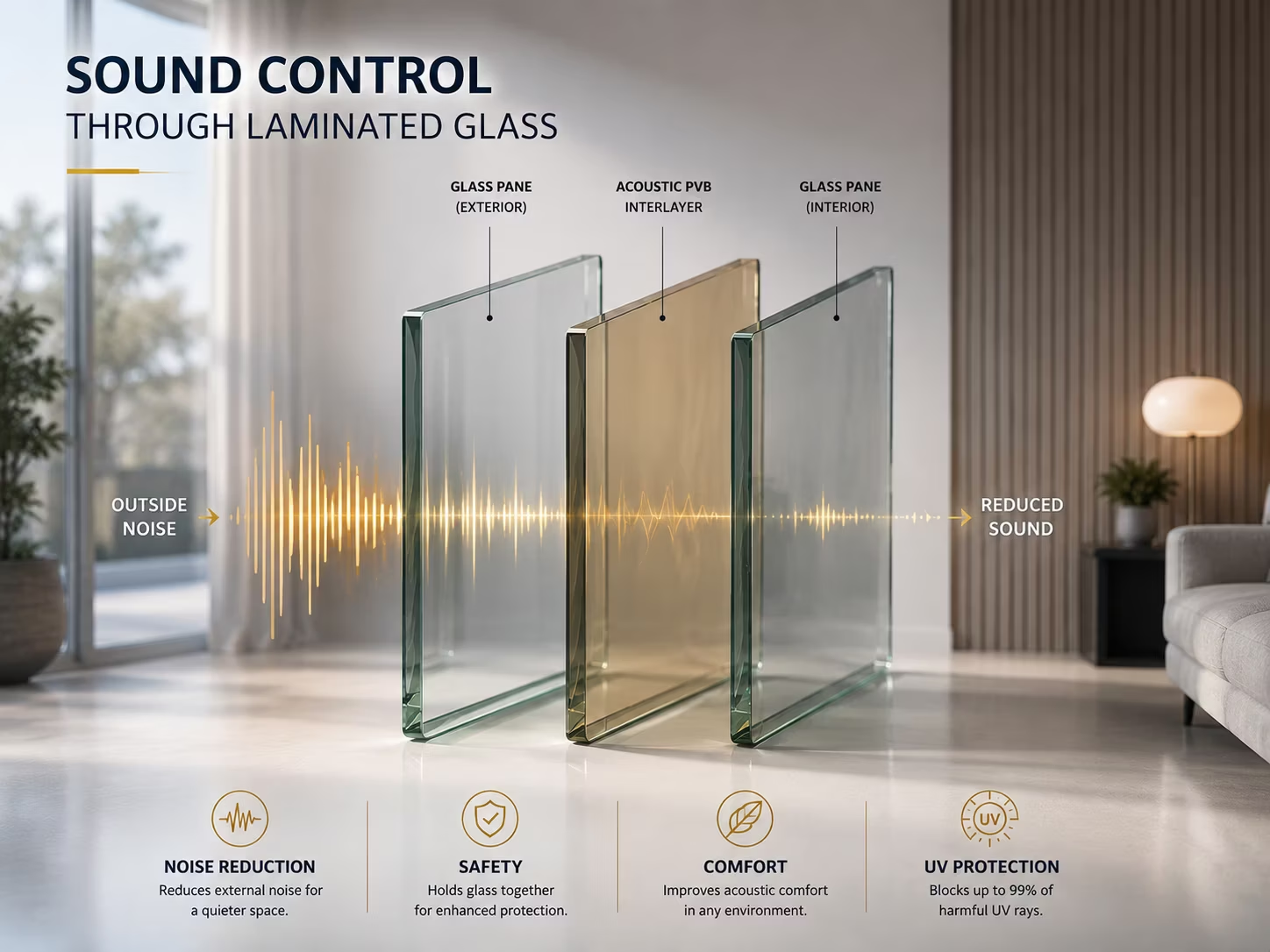
To combat resonance, acoustic laminated glass uses a highly specialized elastomeric PVB interlayer. This interlayer acts as a shear-dampening core, converting acoustic vibration energy into heat. Additionally, combining glass panes of different thicknesses (e.g., 6mm and 8mm) in an Insulated Glass Unit (IGU) creates an asymmetrical glazing system. This prevents the panes from vibrating at the same frequency, offering superior noise isolation.