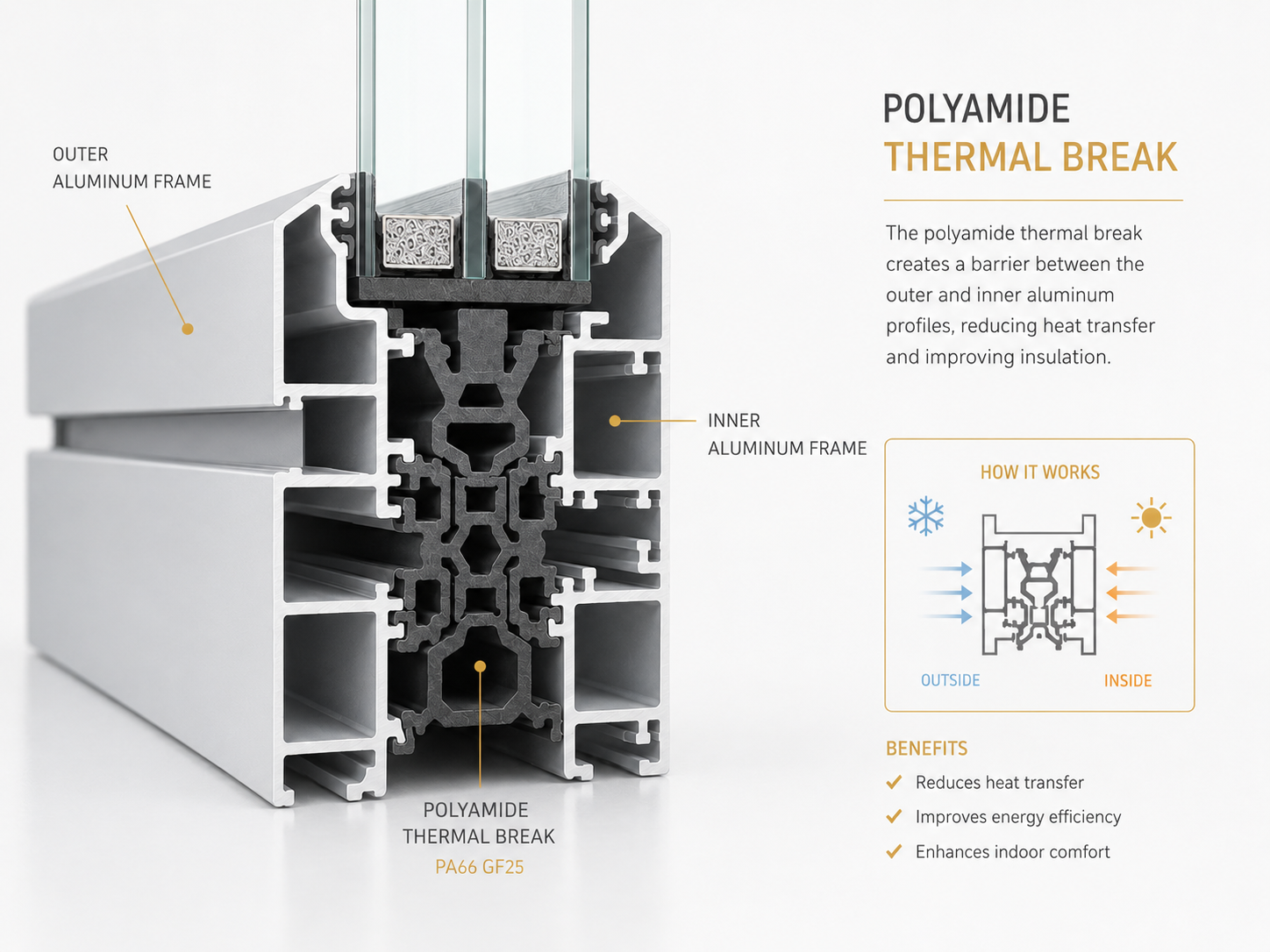
Two metrics dominate window energy performance specifications: U-value (the rate of heat transfer through the glazing system) and Solar Heat Gain Coefficient (SHGC, the fraction of solar radiation admitted through the glass). In temperate climates, both values are roughly equally important. In the Gulf region, however, the balance shifts dramatically — and misunderstanding this distinction leads to costly, under-performing buildings.
Understanding U-Value in Context
U-value (W/m²·K) measures how readily a window assembly conducts heat driven by a temperature difference between inside and outside. In cold climates, a low U-value is critical to prevent heat loss. In Saudi Arabia and the broader Gulf region, where winter is brief and mild, the indoor-outdoor temperature difference during the heating season is modest. A typical Riyadh winter day of 12 °C versus an interior setpoint of 22 °C produces a ΔT of only 10 K — generating relatively small conductive losses through the window assembly.
Why SHGC Dominates the Gulf Energy Equation
The Solar Load Reality
During summer, direct solar irradiance on a west-facing glass facade can exceed 700 W/m². With an SHGC of 0.40, every square metre of glazing admits 280 W of heat into the conditioned space, continuously, throughout the afternoon. No reasonable improvement in U-value can offset this solar load. Specifying low-SHGC glazing (0.20–0.25) combined with a polyamide thermal break frame is the most effective energy strategy for Gulf climate zones, delivering measurable HVAC load reductions and direct savings on running costs.