In 2025, soundproof windows and doors have moved decisively from a luxury specification to a fundamental building performance requirement. As urban density intensifies across the Gulf region and globally, noise pollution has been elevated from an inconvenience to a recognised public health concern. Research published in 2025 links chronic noise exposure directly to cardiovascular disease, sleep disruption, elevated stress hormones, anxiety, and reduced cognitive performance — placing acoustic comfort firmly within the scope of responsible building design.
The Health Case: Why Silence Is a Medical Necessity
The medical evidence is unambiguous. Chronic exposure to environmental noise above 55 dB(A) — a level routinely exceeded on urban arterial roads, near airports, and in dense residential neighbourhoods — is associated with a significantly elevated risk of hypertension and ischaemic heart disease. Sleep disruption caused by night-time noise (traffic, air conditioning equipment, neighbouring activity) compounds these effects by preventing the restorative physiological processes that occur during deep sleep. For building occupants — whether in residential, office, hospitality, or healthcare settings — acoustic isolation is not a comfort feature; it is a health protection measure.
The Productivity Case: Acoustic Comfort in the Modern Workplace
Remote Work, Focus, and Clear Communication
The permanent shift to hybrid and remote working has made the acoustic performance of the home environment a professional necessity. A home office window that allows external traffic noise to penetrate at 50–60 dB creates an environment in which sustained cognitive focus is measurably impaired and video conference audio quality is compromised. Acoustic windows and doors — achieving STC ratings of 40 dB and above — reduce exterior noise intrusion to levels where focused work, clear communication, and professional-quality audio are consistently achievable.
How Modern Soundproofing Works
Laminated Glass, Multiple Panes & Precision Sealing
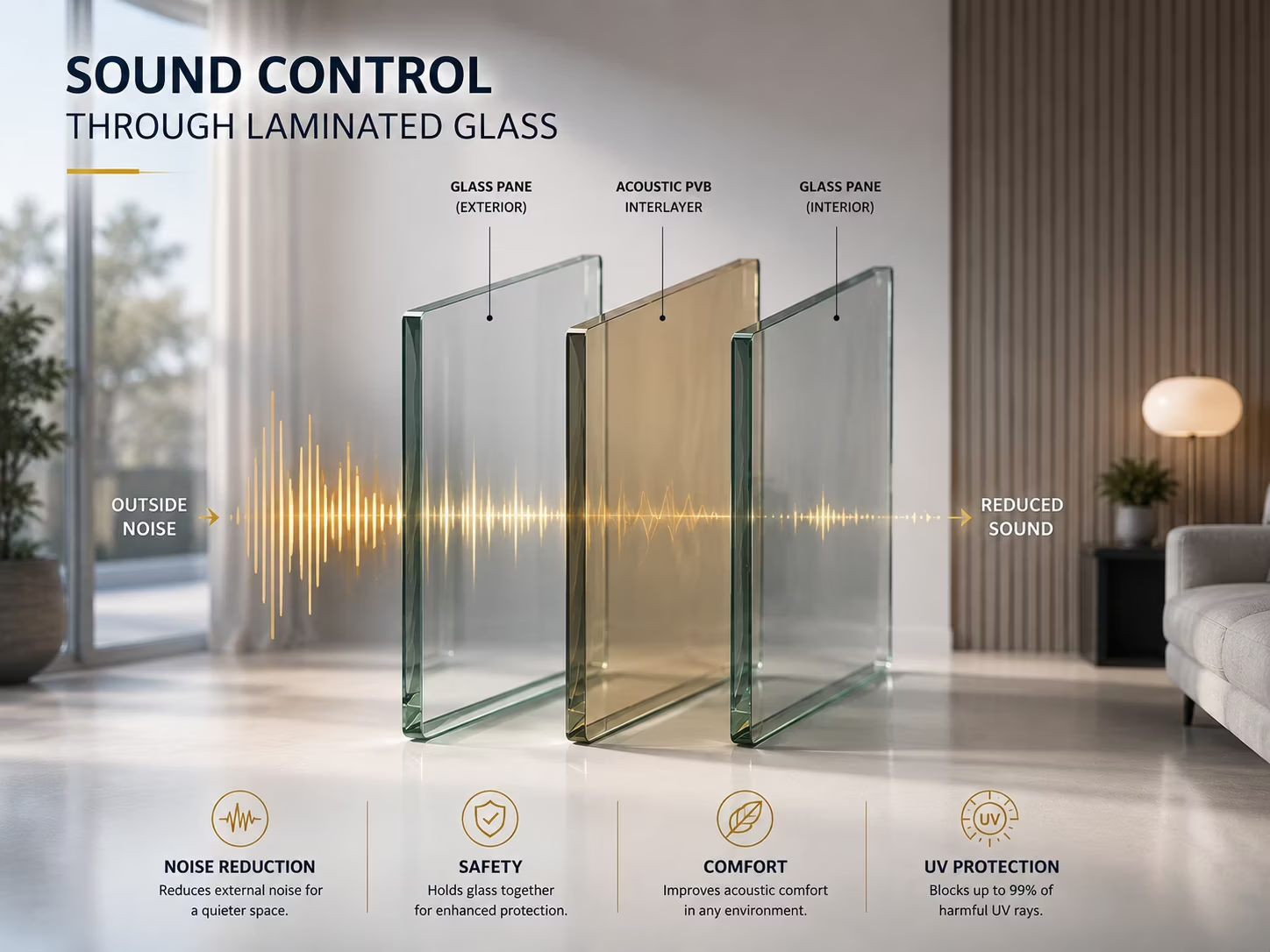
Effective acoustic glazing combines several engineered layers. Acoustic laminated glass uses a specialised elastomeric PVB (polyvinyl butyral) interlayer that acts as a vibration-damping core — converting acoustic energy into negligible heat rather than transmitting it as sound. Double- and triple-pane IGUs create air or inert gas cavities that further disrupt sound wave propagation. Asymmetric glass configurations — using panes of different thicknesses (for example, 6 mm and 10 mm) within the same unit — prevent both panes from resonating at the same frequency, eliminating the coincidence dip that weakens sound attenuation in single-mass glazing systems. Critically, the quality of the perimeter seal is as important as the glass specification: even a premium acoustic IGU will underperform if air paths exist around the frame edges. Precision-machined compression seals and co-extruded EPDM gaskets are essential components of a truly soundproof system.
The Dual Benefit: Acoustic and Thermal Performance Together
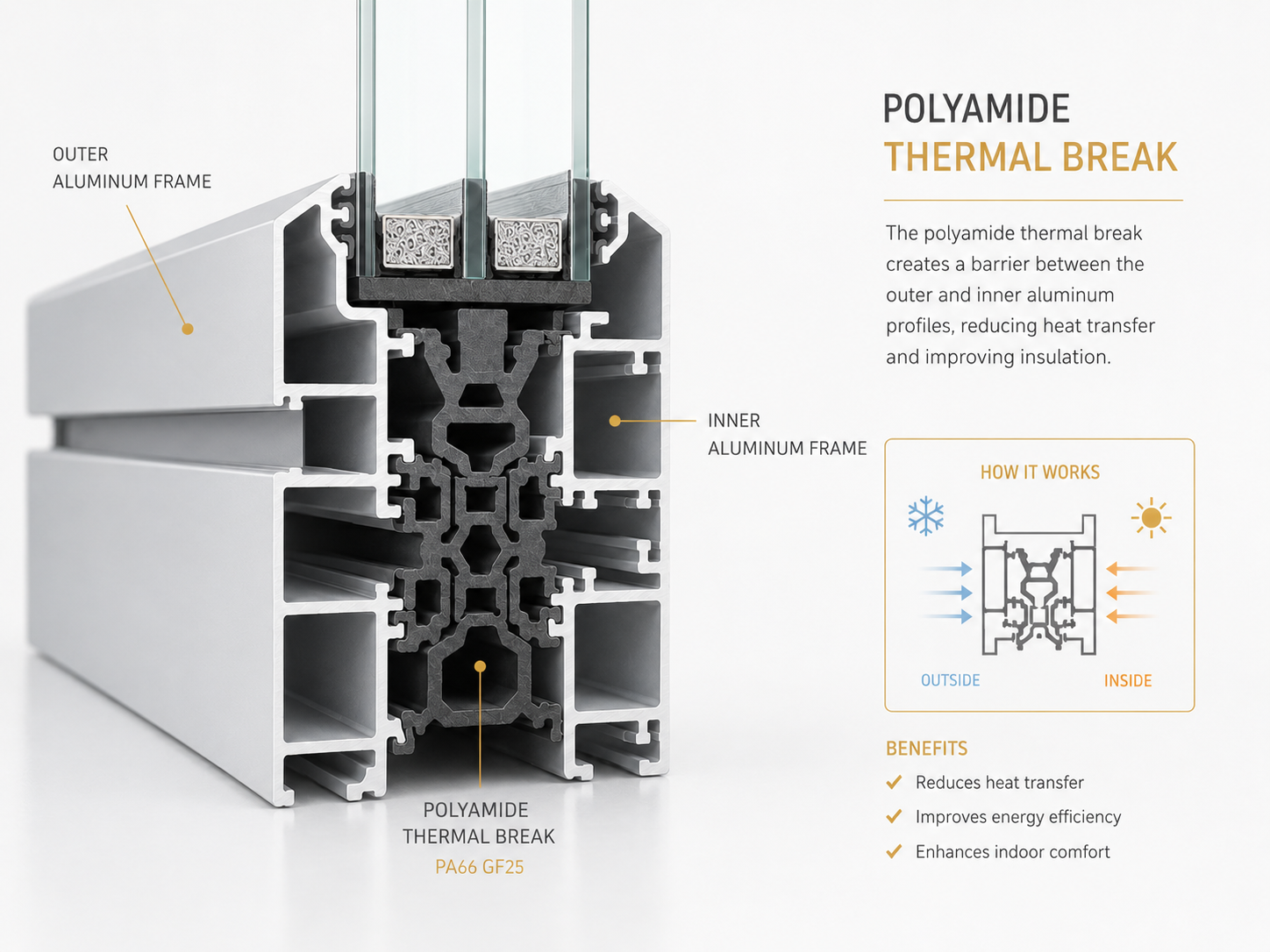
One of the most appealing arguments for acoustic fenestration investment is that the physical properties that make a window or door soundproof also make it thermally efficient. Multi-pane construction, inert gas fills, Low-E coatings, thermally broken frames, and precision perimeter sealing all contribute equally to acoustic and thermal performance. A building owner who specifies acoustic glazing receives thermal performance as a simultaneous benefit — reducing HVAC running costs while delivering a quieter interior. In the Gulf climate, where cooling costs dominate operational energy budgets, this dual return on investment significantly shortens the payback period of the specification upgrade.
Investment Value: Acoustic Comfort and Property Premiums
Acoustic performance is increasingly recognised as a value-adding specification by real estate professionals and institutional investors. Properties with demonstrated noise-reduction credentials — supported by certified STC and OITC test data — command measurable premiums in both sale and rental markets. For developers in the Gulf, where premium residential and hospitality projects compete fiercely on quality and lifestyle credentials, certified acoustic performance is a differentiating specification that supports higher achieved values and stronger occupier satisfaction ratings.