In 2025, the focus on building energy efficiency has intensified, driven by rising energy costs, tightening regulatory codes, and a growing emphasis on sustainability. Research consistently shows that approximately 25–30% of residential and commercial heating and cooling energy is lost directly through windows and doors. Upgrading to premium, engineered fenestration systems is therefore no longer a luxury specification — it is the single most impactful envelope strategy available to developers and building owners.
The Technology Stack: How Premium Systems Work
A Complete Thermal Barrier System
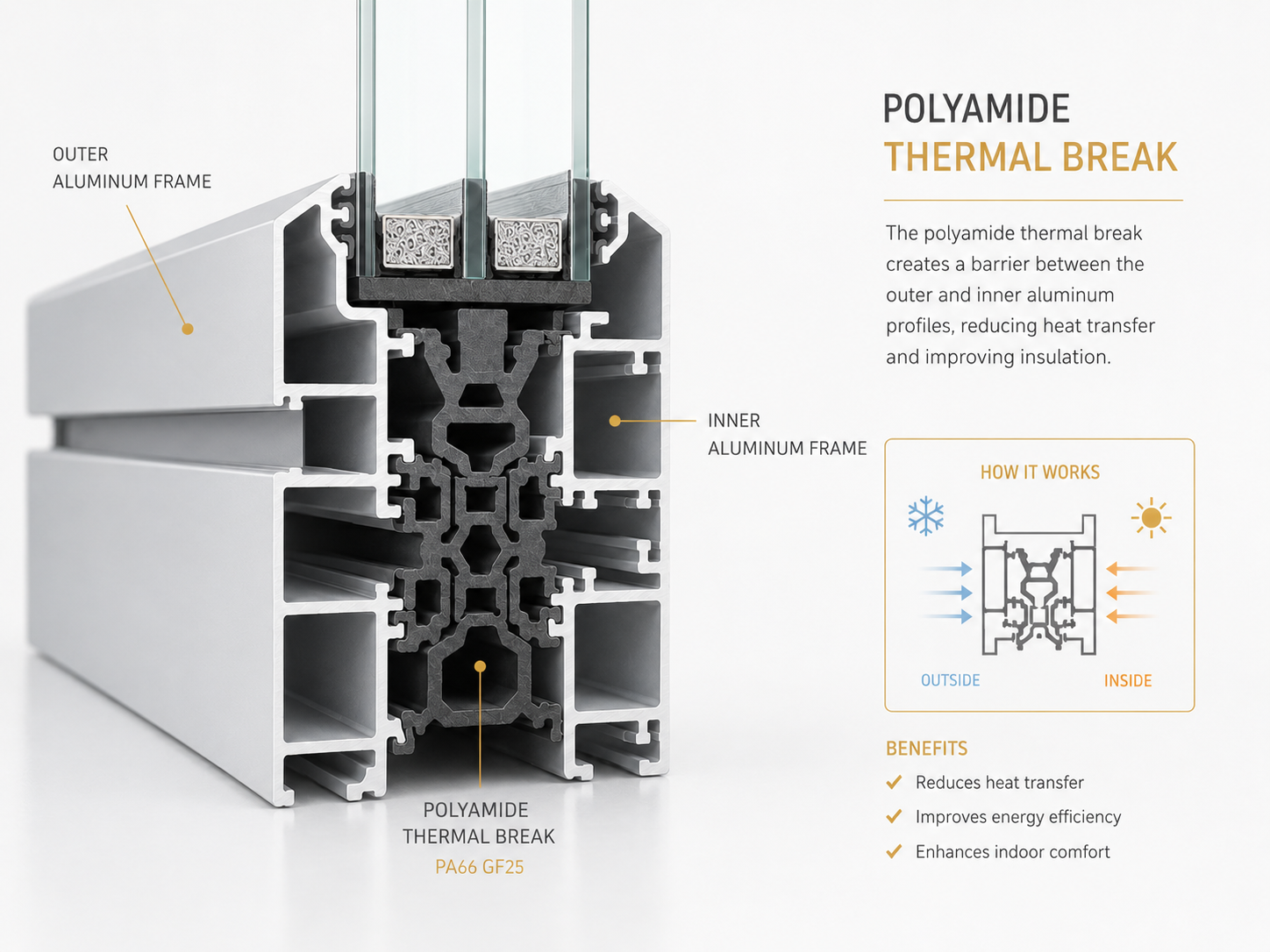
Premium windows and doors are engineered as complete thermal systems, not simply as glass within a frame. Advanced double- and triple-pane insulating glass units (IGUs) form the foundation, with the cavity between panes filled with argon or krypton gas for superior thermal resistance. A Low-Emissivity (Low-E) metallic coating on the inner glass surface reflects infrared radiation back into the space in winter and repels solar heat gain in summer, while allowing visible light to pass freely. Thermally broken aluminum frames — where a continuous PA66 polyamide insert separates the exterior and interior aluminum profiles — prevent the frame itself from becoming a heat bridge. Warm-edge spacers at the glass perimeter complete the system, eliminating cold spots and the condensation they cause.
The Benefits of Upgrading
Energy Savings, Comfort & Property Value
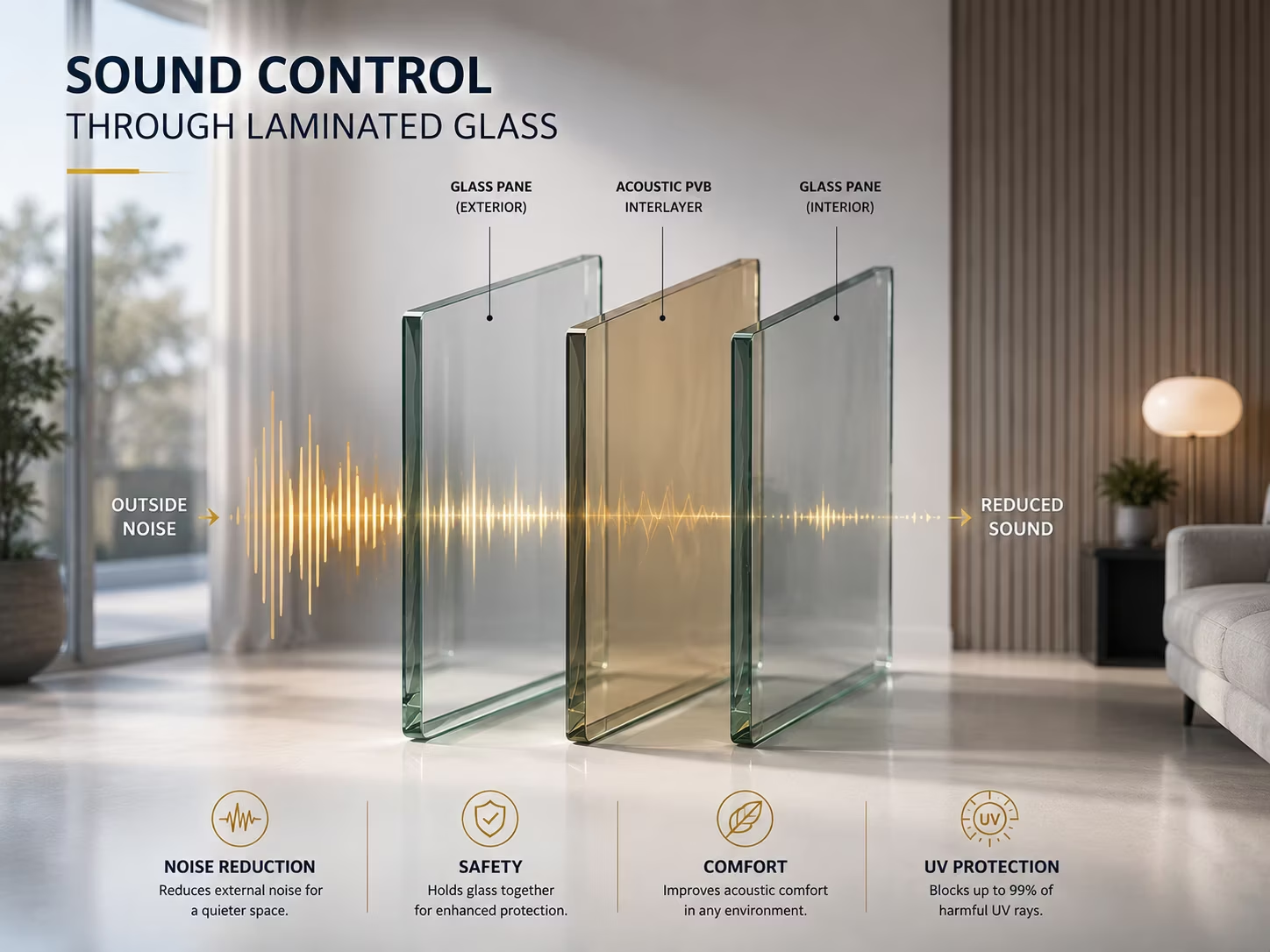
The returns on upgrading to certified premium fenestration are multi-dimensional. On the energy front, documented studies show annual utility bill reductions of 6–13% for buildings achieving ENERGY STAR or equivalent certified ratings, with overall heating and cooling energy reductions of up to 30% attributable to the fenestration upgrade alone. Occupant comfort improves substantially: high-performance seals eliminate draughts, cold spots near windows disappear, and interior temperatures remain consistent across seasons without increased HVAC runtime. The multi-pane construction and precision acoustic seals also deliver measurable noise attenuation — critical in urban environments. Premium fenestration directly boosts property values; energy-conscious buyers and valuers now factor Energy Performance Certificate (EPC) ratings into assessments, and high-specification glazing is among the upgrades with the strongest resale return on investment.
2025 Trends Shaping the Market
Smart Integration & Biophilic Design
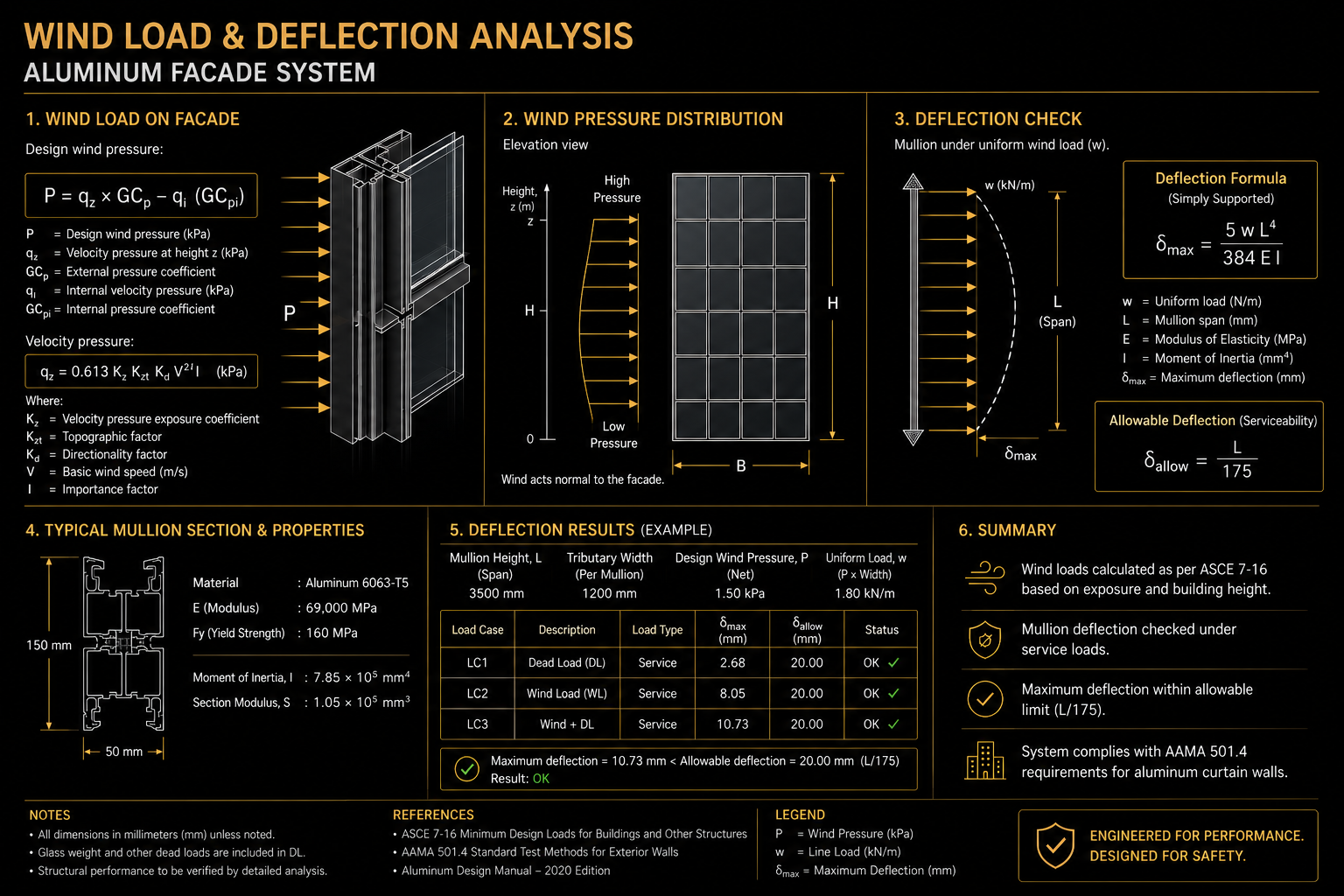
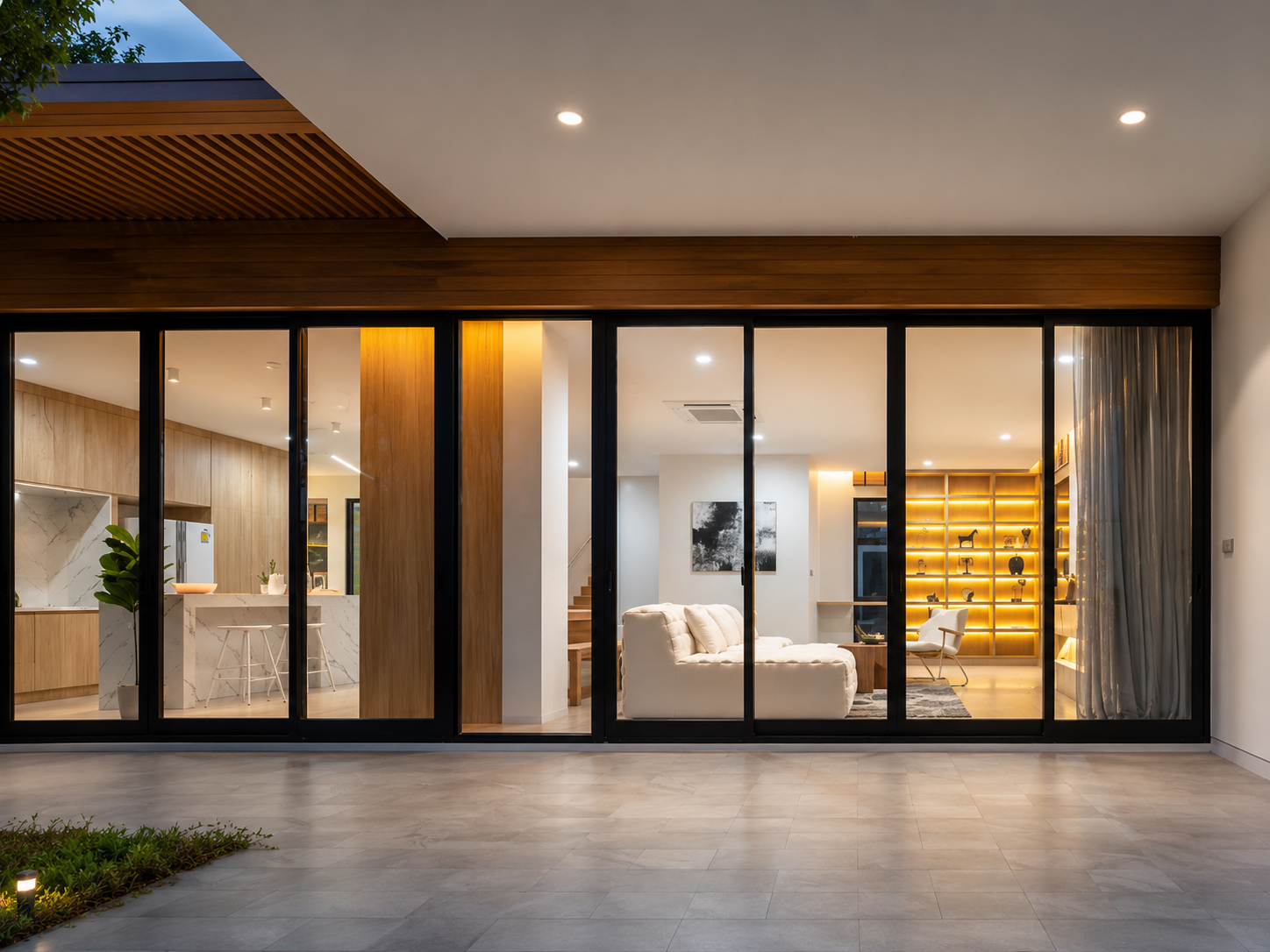
Two intersecting trends are redefining premium fenestration specifications in 2025. First, smart integration: windows and doors are increasingly fitted with sensors monitoring humidity, air quality, and security status, while automated features such as remote locking, motorised blinds, and electrochromic tinting are managed through building management systems (BMS) or consumer smart home platforms. Second, biophilic design: there is strong and growing demand for expansive, floor-to-ceiling glazing that maximises natural light and creates a seamless visual connection between indoor and outdoor environments. High-performance systems now make these large spans thermally viable, combining structural mullion engineering with superior glazing specifications to achieve both aesthetic and energy targets simultaneously. Sustainability is the third pillar — manufacturers are increasingly focused on recyclable aluminium alloys, reduced-carbon manufacturing processes, and cradle-to-gate environmental product declarations (EPDs) to meet the ESG requirements of institutional clients and government projects.
The Critical Role of Professional Installation
Even the most technically advanced window or door system can perform poorly if not installed correctly. Improper fitting — inadequate perimeter sealing, misaligned hardware, or insufficient structural fixing — can compromise the thermal and acoustic performance of the system by up to 30%, negating much of the investment. Professional installation by trained, certified contractors using manufacturer-approved anchorage and sealing systems is therefore not a recommendation but a requirement. For projects in the Gulf region, Prestige Systems Engineering provides fully supervised installation services, ensuring every system is commissioned to its certified performance specification and compliant with SBC 601 energy and structural requirements.